
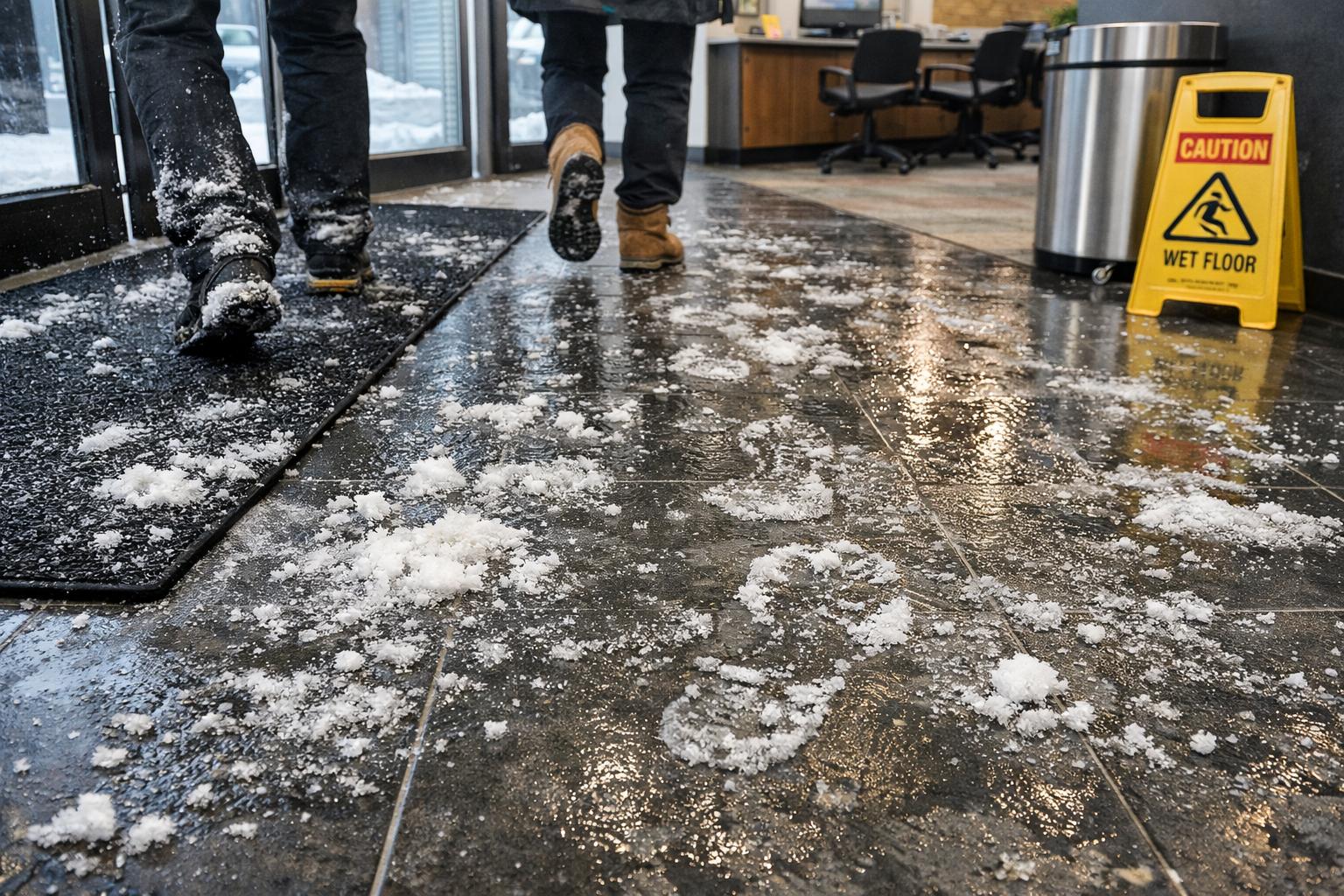
When snow hits Long Island, most business owners focus on parking lots and sidewalks. But once employees and visitors step inside, the real damage begins.
Every boot that crosses your threshold carries water, salt, sand, and chemical de-icers onto your floors. What looks like a temporary inconvenience can quickly turn into a safety hazard, a liability risk, and long-term surface damage.
If you manage an office, medical facility, retail space, or commercial building, your floors are under more stress right now than at any other time of year.
Let’s talk about why.
The Hidden Damage Caused by Road Salt
Salt is effective outdoors. Indoors, it’s destructive.
When tracked inside, salt particles act like sandpaper. As people walk across tile, vinyl, laminate, or even sealed concrete, those tiny grains grind into the finish. Over time, that friction dulls shine, scratches protective coatings, and shortens the life of your flooring.
Worse, salt residue doesn’t simply disappear when it dries. It leaves behind a white, chalky film that can stain grout lines and discolor surfaces. In entryways and high-traffic corridors, this buildup can permanently change the appearance of your floors.
Without consistent removal, winter can age your flooring faster than the rest of the year combined.
Slip Hazards Increase During Snow Events
Snowstorms don’t just create outdoor hazards. They create indoor liability.
Melting snow collects near entrances and spreads across lobbies, hallways, and common areas. Even small amounts of water can create slick surfaces, especially on polished tile or stone.
For property managers and business owners, that means increased risk of:
- Employee injury
- Customer accidents
- Workers’ compensation claims
- Insurance liability exposure
A single slip-and-fall incident can cost far more than months of preventative maintenance.
The key is not just cleaning once per night. During active storms, floors often require increased monitoring and maintenance throughout the day.
Entry Mats: Your First Line of Defense
One of the most overlooked winter strategies is proper mat placement.
High-quality commercial mats can capture a significant amount of moisture and debris before it spreads. But placement matters. Ideally, businesses should have matting both outside and inside entrances, allowing multiple steps for shoes to shed moisture.
Short or decorative mats simply don’t provide enough coverage. And saturated mats that aren’t rotated or dried can actually worsen the problem.
A winter floor plan should include:
- Adequate entry mat coverage
- Routine mat maintenance
- Increased cleaning frequency during storms
- Immediate attention to pooling water
This layered approach dramatically reduces risk.
What Winter Means for Different Floor Types
Not all floors react the same way to winter stress.
Luxury vinyl tile can experience surface dulling from abrasion. Ceramic tile may resist scratching but show heavy salt buildup in grout lines. Hardwood and laminate are especially vulnerable to moisture infiltration. Even commercial carpet can trap salt and become stiff or discolored over time.
Regular neutral cleaning solutions, proper dwell time, and thorough rinsing are essential to remove residue rather than simply spreading it.
Professional maintenance during winter focuses on both appearance and protection — preserving finish, extending lifespan, and preventing premature replacement.
The Cost of Ignoring Winter Floor Maintenance
It’s easy to assume winter damage is temporary. But without proper care, the effects linger long after the snow melts.
Businesses that neglect winter maintenance often notice:
- Faded shine that never fully returns
- Persistent white salt haze
- Increased floor refinishing needs
- Premature replacement costs
- Higher accident risk
By spring, many properties require deep cleaning or restorative services that could have been minimized with proactive winter care.
Winter isn’t just a messy season. It’s a stress test for your facility.
A Proactive Winter Cleaning Strategy for Long Island Businesses
On Long Island, winter weather is unpredictable. One week may be dry and cold. The next may bring heavy snowfall followed by freezing rain.
A professional winter cleaning strategy adjusts accordingly.
That can include increased entryway focus, more frequent floor inspections, targeted mopping of high-traffic areas, and ensuring disinfecting protocols remain intact even during high-moisture conditions.
For property managers overseeing multiple tenants, consistency is especially important. Clean, safe floors signal professionalism and care. They also reduce risk.
When cleaning protocols account for winter realities, your building stays safer, looks better, and protects its long-term investment.
Is Your Current Cleaning Plan Winter-Ready?
If your floors look duller than usual, feel slick during storms, or show visible salt residue, it may be time to review your maintenance plan.
Winter cleaning isn’t about appearances alone. It’s about safety, asset protection, and responsible facility management.
At DeLuca Cleaning, we understand the unique seasonal challenges Long Island businesses face. Our commercial cleaning services adapt to winter conditions to help protect your floors, your employees, and your clients.
If you’d like to review your current cleaning protocol or prepare for the next storm, we’re here to help.
FAQ
During active snow events, high-traffic entry areas may need attention multiple times per day. At minimum, nightly professional cleaning combined with daytime spot maintenance is recommended.
Yes. Salt particles can scratch protective finishes and leave behind residue that causes discoloration or dullness if not properly removed.
Absolutely. Properly sized commercial mats significantly reduce moisture and debris from spreading across interior floors.
Yes. Wet surfaces from tracked-in snow increase indoor slip risk, especially near entrances and lobbies.
In most commercial settings, yes. Winter conditions often require temporary adjustments to protect floors and reduce liability.
Call for a Free Quote: 631-422-0182-