The commercial cleaning industry is experiencing a quiet revolution, and it has nothing to do with new chemicals or better mops. Smart building technology is fundamentally changing how we think about keeping offices clean.
For decades, cleaning services operated on assumptions and fixed schedules. Every office got cleaned the same way, on the same days, regardless of actual usage. A conference room that sat empty all week received the same attention as a bustling break room. We’re now discovering just how inefficient that approach really was.
When Buildings Start Talking
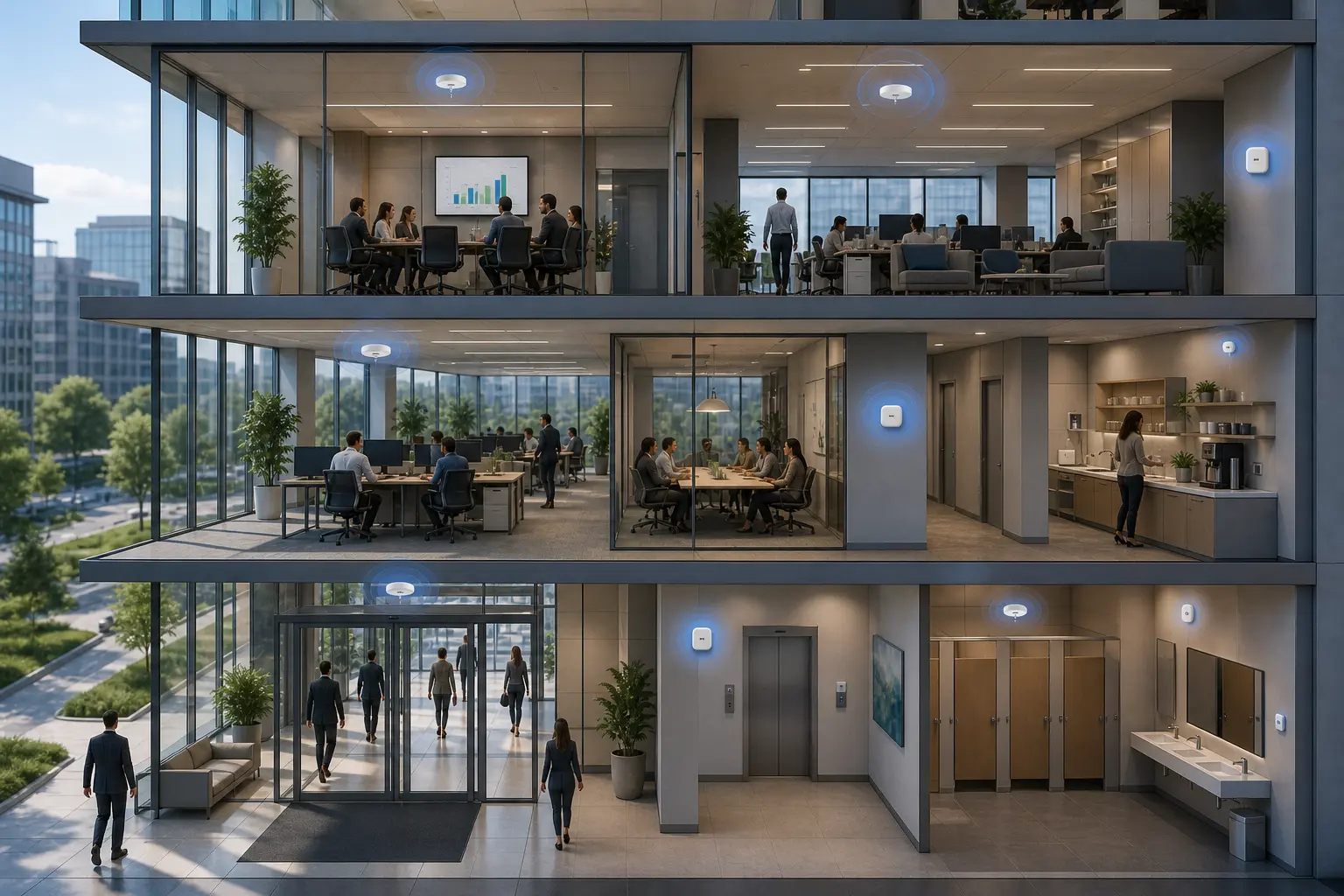
Modern office buildings are becoming incredibly chatty. Sensors embedded throughout commercial spaces are collecting data that would have seemed like science fiction just ten years ago. These aren’t cameras watching people work. They’re simple devices counting foot traffic, measuring air quality, tracking restroom usage, and monitoring when conference rooms actually get used.
The insights are eye-opening. That executive bathroom on the fourth floor that gets a full cleaning every night? The data shows it’s only used three times per day. Meanwhile, the first-floor restroom near the lobby sees 200 visits daily and probably needs attention twice as often as it’s currently getting.
One property manager in Manhattan recently shared data showing that 40% of their office space receives almost no foot traffic on Fridays. They were paying for full cleaning services on spaces that barely got touched. The waste was staggering, but nobody knew until the building told them.
Beyond Counting Footsteps
The really interesting developments go deeper than simple traffic counts. Air quality sensors can detect when a space needs attention before it becomes obvious to human noses. Humidity monitors identify areas prone to mold growth. Even soap and paper towel dispensers are getting smart, signaling when they’re running low instead of leaving occupants high and dry.
Some facilities are experimenting with pressure-sensitive floor mats that can distinguish between a few people walking through and a crowd congregating. This helps identify which areas experience heavy wear and need more frequent deep cleaning attention.
The technology isn’t replacing human judgment. A good cleaning professional still knows things no sensor can detect. But the data fills in blind spots that even experienced crews might miss.
Predictive Cleaning Changes Everything
Here’s where it gets really interesting for business owners. Instead of cleaning on a rigid schedule, facilities can adjust the focus to where it is most needed. This concept, called predictive cleaning, uses historical data to anticipate when and where attention is required.
A corporate cafeteria might see a spike in usage every Tuesday when the company holds all-hands meetings. The data shows this pattern repeating week after week. Now the cleaning service knows to schedule extra support on Tuesday afternoons rather than spreading resources evenly across all days.
Weather data gets incorporated too. Rainy days on Long Island mean muddy footprints and wet floors in building lobbies. Smart systems can alert cleaning crews to increase lobby attention when rain is forecast, then scale back during dry spells.
The efficiency gains are substantial. Some facilities report reducing overall cleaning costs by 15-20% while actually improving cleanliness scores. The secret is putting resources exactly where and when they’re needed instead of everywhere all the time.
The Human Element Still Matters
None of this technology replaces skilled cleaning professionals. If anything, it makes their expertise more valuable. Instead of following rote checklists, cleaning staff can focus their skills where they’ll make the biggest impact.
Think of it like a doctor using diagnostic tools. An MRI doesn’t replace medical training. It gives the doctor better information to apply their expertise more effectively. Building sensors do the same thing for cleaning services.
The best implementations involve cleaning crews in the process. They notice things sensors miss and can flag when the data doesn’t match reality. A sensor might say a bathroom is lightly used, but an experienced cleaner knows that three uses can create a bigger mess than thirty if those three people were particularly careless.
Privacy Concerns and Practical Limits
Business owners sometimes worry about the privacy implications of sensor-filled buildings. The good news is that cleaning-focused systems don’t need to identify individuals. They’re counting bodies and measuring conditions, not tracking specific people.
Most systems use anonymous data collection. A restroom sensor knows someone entered and exited but has no idea who. It’s the same principle as those traffic counters cities use on roads. Nobody cares which specific car drove by, just how many cars total.
There are practical limitations too. Sensors need maintenance, batteries die, and systems occasionally glitch. The technology works best as a supplement to experienced human oversight, not a replacement for it.
Cost is another consideration. Outfitting an entire building with sensors requires upfront investment. For some facilities, especially smaller offices, the return on investment might take years to materialize. Larger commercial properties with higher cleaning expenses tend to see faster payback.
What This Means for Long Island Businesses
The smart building trend is reaching Long Island commercial properties faster than many realize. New construction increasingly includes sensor infrastructure as standard equipment. Retrofitting older buildings is becoming more affordable as the technology matures and becomes mainstream.
For business owners, this creates an opportunity to have more informed conversations with cleaning services. You can now ask questions that would have been impossible to answer five years ago. Which areas of your office actually need daily attention? Where could you reduce service frequency without impacting cleanliness? What does usage look like during your busy season compared to slow periods?
Progressive cleaning companies are already adapting their service models to incorporate data insights. They’re moving away from one-size-fits-all contracts toward flexible arrangements that respond to real conditions. This benefits both parties. Clients pay for what they actually need, and cleaning companies can deploy their teams more efficiently.
The Future Is Already Here
Some of the most advanced applications are already in use. Hospitals use sensors to ensure operating rooms meet stringent cleanliness standards between procedures. Hotels optimize housekeeping schedules based on actual room occupancy and checkout patterns. Corporate campuses adjust janitorial coverage based on which buildings employees are actually using on any given day.
The technology will only get more sophisticated. Machine learning algorithms are beginning to identify patterns humans might never notice. They can predict when a particular area is likely to need deep cleaning based on dozens of variables interacting in complex ways.
Integration with other building systems is expanding too. HVAC systems can coordinate with cleaning schedules to ensure proper ventilation during and after service. Lighting can automatically brighten in areas being cleaned and dim in spaces that don’t need attention yet.
Starting Small Makes Sense
You don’t need to transform your entire facility overnight. Many businesses start with pilot programs in high-traffic areas like lobbies, restrooms, and break rooms. The data from these spaces often reveals insights applicable to the whole building.
Even simple changes based on basic observation can yield results. Asking your cleaning service to track which tasks take the most time and which areas consistently need extra attention provides valuable baseline information. Adding a few sensors to validate and expand on these observations is a logical next step.
The key is partnering with a cleaning service that understands how to interpret and act on data. Not every company has made this transition yet. Look for providers who ask questions about your actual space usage rather than just offering standardized packages.
The Bottom Line
Smart building technology is turning cleaning from a necessary expense into an optimizable investment. The data removes guesswork and enables precision that simply wasn’t possible before. Offices get cleaner while often spending less money and using fewer resources.
For Long Island businesses competing for talent and clients, this matters more than ever. A genuinely clean, well-maintained workspace sends a message about your organization’s attention to detail and commitment to employee well-being. The difference between adequate cleaning and exceptional cleaning often comes down to putting effort in the right places at the right times.
The buildings themselves are ready to tell us exactly where and when that is. We just need to listen.
Smart Building Cleaning FAQs
Demand-based cleaning uses information about how a building is actually used, such as foot traffic, room bookings or restroom usage, to decide where cleaning effort goes. Busy areas get more frequent attention and empty spaces get less, instead of every room being cleaned the same way on a fixed schedule.
No. Sensors can show where traffic is heavy or supplies are running low, but people still do the cleaning, notice problems and make judgment calls. The technology is most useful as a planning tool that helps a trained cleaning team spend time where it matters most.
Not necessarily. Many facilities start with simpler information such as attendance patterns, meeting schedules and feedback from staff. A commercial cleaning provider can use that information to adjust frequency by area, and sensors can be added later if the building already uses them.
DeLuca Cleaning Systems creates a customized service plan for each client based on cleaning and logistical requirements. Sharing how your space is used, including busy times and low-traffic zones, during a free estimate helps shape a schedule that fits your facility.
Call for a Free Quote: 631-422-0182-