Professional cleaning plays a critical role in maintaining a healthy workplace, but it doesn’t operate in a vacuum. Germs don’t wait for a scheduled cleaning, and in busy offices, medical practices, and commercial spaces, they spread quickly through everyday activity.
During the winter months especially, when employees spend more time indoors and seasonal illnesses circulate more easily, business owners often ask the same question: What can we realistically do between professional cleanings to reduce germ spread?
The good news is that small, consistent habits can make a meaningful difference. These steps are not a replacement for professional cleaning, but they can help support it—keeping workplaces healthier, more productive, and more professional-feeling day to day.
Focus on the Surfaces People Touch the Most
When people think about germs, they often think about floors or visible messes. In reality, the biggest contributors to germ spread are the things people touch dozens—or even hundreds—of times per day.
Door handles, push plates, light switches, elevator buttons, printer controls, and shared office equipment are constantly re-contaminated. Even in offices that “look clean,” these high-touch surfaces can quietly accumulate bacteria and viruses throughout the day.
Encouraging staff to wipe down shared equipment periodically, especially during cold and flu season, can help reduce surface contamination between professional cleanings. This is particularly important in conference rooms, breakrooms, and reception areas where multiple people interact with the same surfaces in short timeframes.
Be Strategic About Hand Sanitizer Placement
Simply having hand sanitizer available isn’t enough—where it’s placed matters.
Many offices place a single bottle at the front desk and assume the problem is solved. In reality, people are far more likely to use sanitizer when it’s convenient and visible at the moment they need it.
High-impact locations include building entrances, breakrooms, shared equipment areas, conference rooms, and near printers or copiers. Restrooms are important too, but sanitizer placement outside restrooms reinforces hygiene habits even after handwashing.
For business owners, this is a low-cost, high-return step that supports overall cleanliness without adding operational complexity.
Don’t Overlook Breakrooms and Shared Kitchens
Breakrooms are one of the most common sources of germ spread in commercial spaces. Coffee machines, refrigerator handles, microwave keypads, and shared tables see constant use, often with minimal cleaning between uses.
These areas feel informal, which means people are less cautious about hygiene. Over time, that casual use adds up.
Posting gentle reminders about wiping down surfaces after use and providing disinfecting wipes in these areas can go a long way. It also signals to employees that cleanliness is a shared responsibility—not just something handled after hours.
Encourage Smarter Desk and Workspace Habits
In offices with shared desks, rotating workstations, or hybrid schedules, personal workspaces change hands frequently. Even in traditional offices, employees eat at desks, use shared phones, or move between work areas throughout the day.
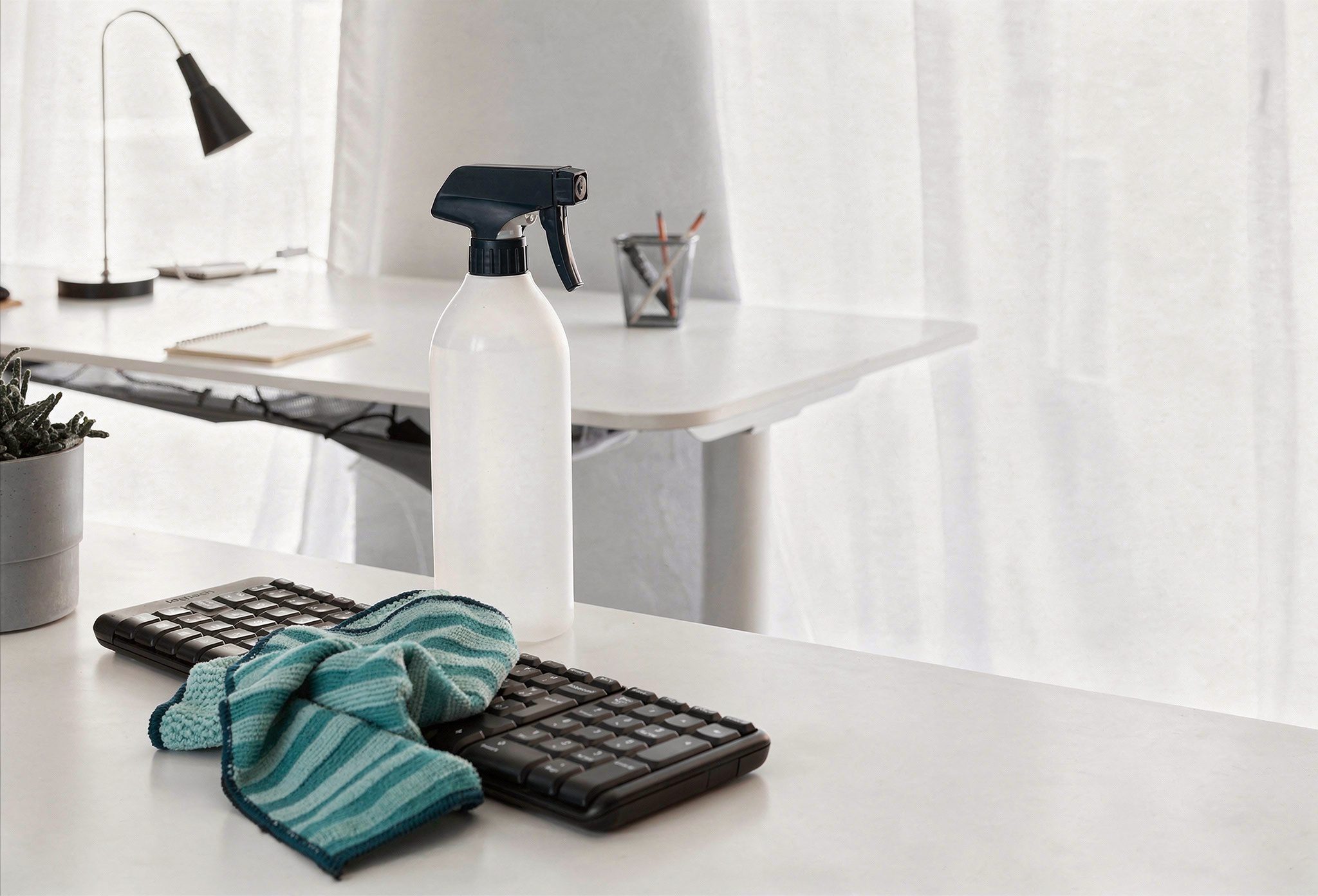
Encouraging simple habits—such as wiping down keyboards, phones, and desk surfaces at the start or end of the day—helps reduce the buildup of germs between cleanings. This is especially important in healthcare offices, property management firms, and any environment where visitors regularly interact with staff.
These practices don’t need to be rigid or overbearing. Framing them as professional courtesy rather than strict rules helps with long-term adoption.
Understand the Limits of DIY Cleaning
It’s important for business owners to understand what these measures can—and cannot—do.
Disinfecting wipes and sanitizer are helpful, but they are not substitutes for professional cleaning protocols. They address surface-level contamination, not deep cleaning, cross-contamination prevention, or proper disinfectant dwell times.
Professional cleaning services use commercial-grade products, trained techniques, and systematic processes that go beyond what can reasonably be handled during the workday. Regular professional cleaning ensures consistency and thoroughness that ad-hoc efforts simply can’t match.
Between-cleaning habits should be viewed as support, not replacement.
Why Professional Cleaning Still Matters More Than Ever
When professional cleaning is paired with smart daily habits, the result is a noticeably healthier and more polished workplace. Employees feel more comfortable, visitors notice the difference, and business owners reduce the likelihood of illness-related disruptions.
Especially during winter months on Long Island, when seasonal illnesses are more common and offices are closed up tightly, professional cleaning provides a foundation that everyday efforts build upon.
The goal isn’t perfection—it’s consistency. Clean environments don’t happen by accident; they happen through thoughtful systems and reliable professional support.
A Cleaner Workplace Is a More Resilient Workplace
Minimizing germ spread isn’t about creating anxiety or adding unnecessary rules. It’s about protecting people, maintaining productivity, and presenting a professional environment that reflects how much a business values its staff and clients.
Simple actions between professional cleanings can make a difference, but long-term results depend on experienced commercial cleaning partners who understand how businesses actually operate.
Call for a Free Quote: 631-422-0182-