
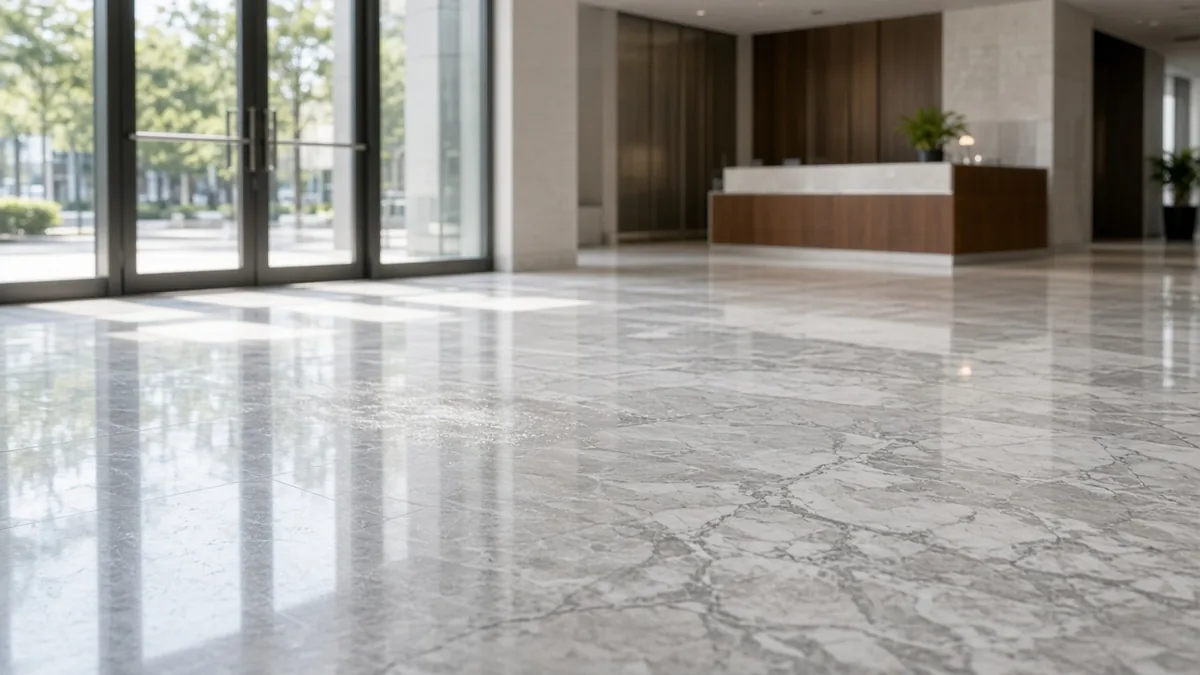
A marble floor that looks dull after cleaning may have surface residue, acid etching, scratches or an uneven finish. Those conditions call for different responses, so another round of mopping is not automatically the right next step.
For a Long Island facility manager, the useful question is not simply whether the lobby is clean. It is whether the problem sits on the surface or involves the stone’s finish. Start by recording what you see, reviewing the care history and arranging an assessment when the cause remains unclear.
Marble floor dull after cleaning? Check the intended finish
Not every marble floor is intended to reflect light sharply. A honed finish has a lower sheen than a polished finish. Compare today’s appearance with installation records, older photographs or a protected area of the same stone before describing the whole floor as damaged.
A dull marble lobby floor might have several conditions at once. For example, surface film and scratches need not be mutually exclusive. The observations below help organize a walkthrough; they cannot establish a diagnosis from appearance alone.
Use a symptom checklist, not a repair prescription
| What you observe | Possible cause to discuss | Useful next step |
|---|---|---|
| Broad haze or streaks noticed after mopping | Cleaner residue or an issue with the cleaning routine | Record the product, dilution and rinse procedure for review |
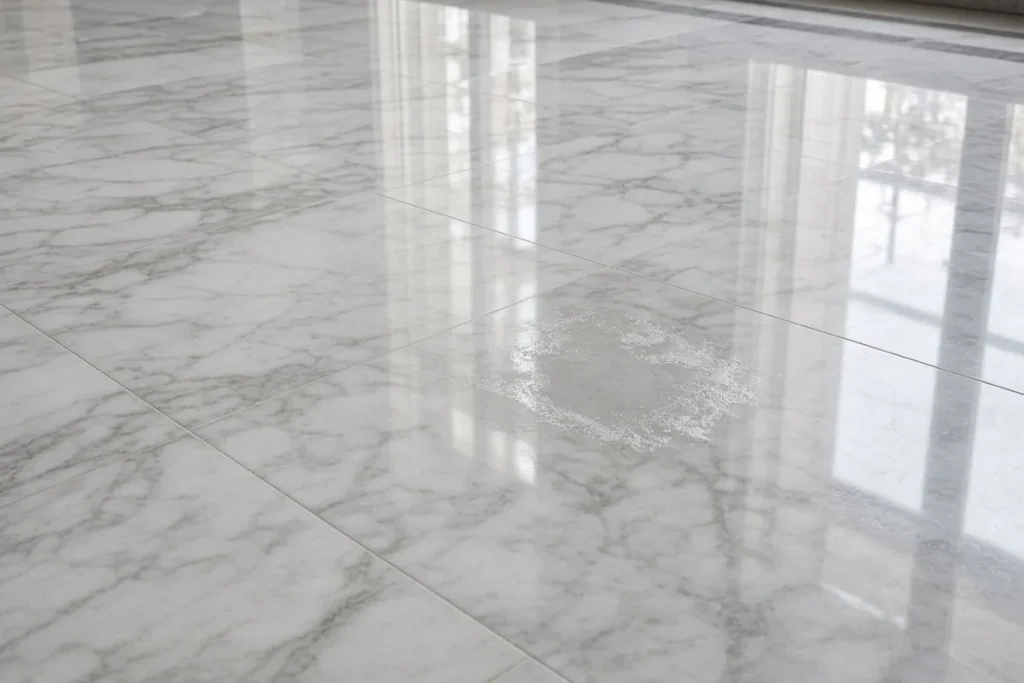
| Local dull spots or splash-shaped marks | Possible etching after contact with an acidic substance | Photograph the shape and note any known spill history |
| A darker or differently colored patch | Possible staining rather than a simple loss of sheen | Record color, location and likely source without applying a stain treatment |
| Fine lines or a worn-looking traffic path | Scratching or finish wear | Compare the route with a less-used area and request assessment |
| An even low sheen throughout | An intentional honed finish may be present | Confirm the intended finish before requesting more shine |
The distinction between marble etching vs staining matters. Etching affects the finish; staining changes the stone’s appearance through a staining substance. An incident can cause both. A colored patch is not proof that polishing is the answer, and a pale dull mark is not enough to identify the chemical involved.
Review the cleaning routine before increasing its strength
The Natural Stone Institute notes that excessive cleaner or soap can leave film and streaks. Ask your cleaning team which product was used, whether the manufacturer’s dilution was followed and how rinsing was handled. Save the label or product information with your maintenance notes.
This is a review of the routine, not an invitation to experiment. Products containing lemon, vinegar or other acids can dull or etch calcareous stone. Abrasive scouring products can scratch some stones. Do not respond to unexplained dullness by switching to a stronger household cleaner or scrubbing pad.
For commercial marble floor care, a consistent record is more useful than several undocumented attempts. If the problem appeared after a product change, note the date and affected areas. If it existed beforehand, say that too. Neither observation alone proves the product caused the condition.
Know when cleaning and finish work are different jobs
Removing soil is not the same as correcting an etched or scratched finish. The Natural Stone Institute recommends professional help for deeper scratches and for etched areas needing refinishing. That is why repeated cleaning may leave the same dull area visible.
DeLuca’s service page describes cleaning, honing, polishing and protection. It also distinguishes restoring a polished appearance from honing or re-honing a lower-sheen surface. Discuss marble polishing and honing for Long Island properties when an assessment suggests the finish needs attention rather than more routine cleaning.
Ask what condition the provider has identified, which finish is proposed and how the treated area should relate to surrounding stone. Do not select honing or polishing solely because one sounds more intensive. The intended appearance and the actual condition should guide the recommendation.
Prepare a useful assessment record
Create a small folder for the lobby instead of sending a single close-up photograph. Include:
- A room-wide view locating the affected area.
- Closer photographs from more than one angle.
- Approximate dimensions and the main walking routes.
- The known stone type and intended finish, if documented.
- Current cleaning products and available maintenance records.
- Known spills, previous treatments and the date the change was noticed.
- Visitor hours, furniture constraints and areas that cannot be closed without coordination.
Keep descriptions neutral: “cloudy area beside reception” is more useful than an unconfirmed diagnosis. Ask whether a representative test area would help establish realistic expectations. GSA’s historic-marble guidance uses assessment and test areas before broader work; it is a useful planning principle, not a treatment specification for every office.
Frequently asked questions
Excess cleaner can leave a film or streaks, while existing finish damage can remain visible after soil is removed. The timing alone does not identify the cause. Review the product instructions, dilution and rinse routine with the cleaning team. Compare the affected area with earlier photographs, and record whether the haze follows mop patterns or appears as isolated marks. Avoid escalating to abrasive cleaning while the cause is uncertain.
Use appearance and maintenance history to form questions, not a final diagnosis. Residue may look like film, a stain may change color, and etching may interrupt the finish’s reflection. Record where each condition appears and whether a spill or product change preceded it. One area may be both etched and stained. Share those observations with the assessor rather than testing several chemicals to see which one changes the mark.
Honing may be considered when the desired result is a consistent lower-sheen finish. Polishing addresses a different finish goal, so the choice needs an assessment. Confirm whether your lobby was originally honed or polished and explain the appearance you want to maintain. Ask the provider to identify the condition and proposed scope before approving work. Do not assume every dull floor needs the same finish treatment.
Prepare wide and close photographs, the affected area’s location, cleaning records and any known spill history. Add the intended finish and access constraints when available. Photograph the floor under ordinary lobby lighting and from different viewpoints without staging a result. Include previous treatment records if you have them. Clear documentation gives the provider a better starting point while leaving the diagnosis to the assessment.
Discuss your lobby’s needs
Please contact DeLuca Cleaning to discuss your cleaning, maintenance or specialty property needs. Call 631-422-0182.
Call for a Free Quote: 631-422-0182-