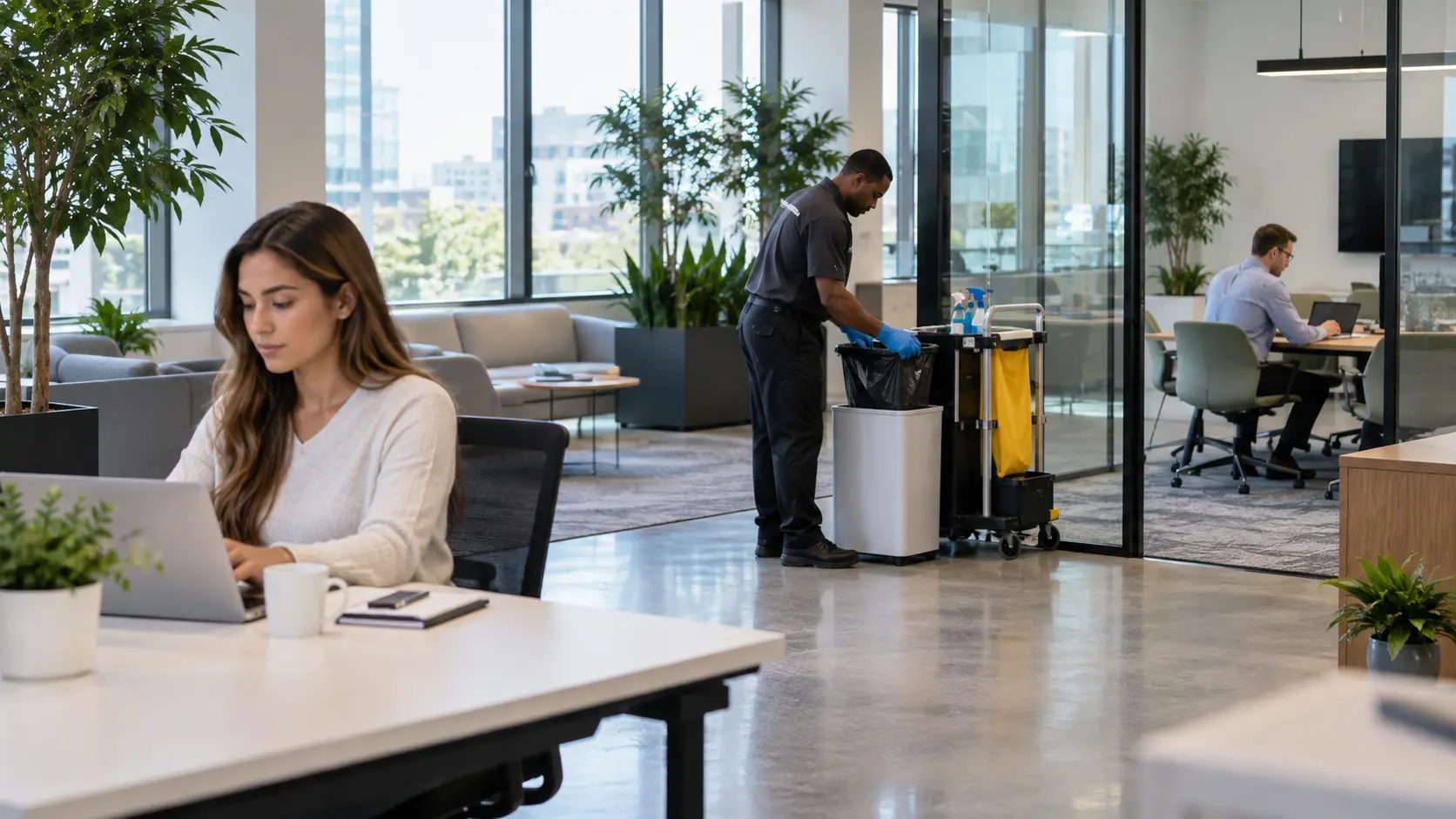
For many businesses, closing the office so a cleaning crew can come in is not realistic. Employees may work late, different departments may keep different schedules, and some facilities operate well beyond the traditional 9-to-5 workday.
That leads to a question commercial cleaning companies hear often: Can the office be professionally cleaned while people are still working?
In many cases, yes. The bigger question is how the cleaning is scheduled and organized so it does not become another distraction.
Does Commercial Cleaning Have to Be Done After Hours?
No. After-hours cleaning is common because it gives the cleaning team easier access to desks, floors, restrooms, conference rooms, and shared areas. It is not the only option.
Some businesses prefer daytime cleaning. Others use a combination, with certain areas cleaned during business hours and more disruptive work completed later.
The best schedule often depends on the type of facility, employee hours, customer traffic, security requirements, and the cleaning tasks that need to be completed.
A professional commercial cleaning plan should work around the way the business operates rather than forcing the business to work around the cleaning crew.
What Cleaning Can Be Done While Employees Are Working?
Many routine cleaning tasks can be completed with very little interruption.
Trash removal, restroom maintenance, wiping common surfaces, cleaning break rooms, restocking supplies, spot cleaning, and maintaining entry areas can often take place during normal working hours. The key is timing.
Vacuuming the conference room during a meeting is probably not going to win anyone over. Emptying wastebaskets in an unused section of the office may barely be noticed. An experienced cleaning company should understand the difference.
What About Noisy Cleaning Tasks?
Noise is one of the biggest concerns when cleaning takes place during business hours. Vacuum cleaners, floor equipment, moving chairs, and other routine tasks can become distracting in offices where employees spend much of the day on the phone, in meetings, or concentrating on detailed work.
That does not mean those tasks cannot be completed. They may simply need to be scheduled differently.
For example, vacuuming could be handled before most employees arrive, during lunch periods, or after a department leaves for the day. Floor maintenance may be scheduled for evenings or weekends.
Commercial cleaning works best when individual tasks are matched to the quietest and least disruptive time available.
Can High-Traffic Areas Be Cleaned During the Day?
Sometimes they should be. Entrances, reception areas, restrooms, kitchens, break rooms, and other heavily used spaces can become dirty long before the end of the workday.
Waiting until the building is empty may not be ideal, particularly in a busy office where employees, customers, vendors, and delivery personnel are constantly coming and going.
Daytime attention can help maintain these spaces before small messes become noticeable problems. This becomes especially useful during rainy weather and the fall and winter months, when water, mud, leaves, salt, and other debris may be tracked through an entrance throughout the day.
How Do You Clean Around Employees Without Getting in Their Way?
A good cleaning schedule divides the facility into practical cleaning zones. Areas that are temporarily unoccupied can be handled first. Conference rooms may be cleaned between meetings. Break rooms can be serviced outside peak lunchtime. Individual offices may be cleaned when employees leave for the day.
Communication also matters. If employees know that a particular area is cleaned at a predictable time, cleaning becomes part of the normal office routine instead of an interruption.
The goal should be for most employees to notice that the office is clean, not spend the day noticing that someone is cleaning it.
Is Daytime Cleaning Better Than Nighttime Cleaning?
Neither schedule is automatically better. Daytime cleaning can make it easier to address spills, restroom usage, trash, entryway debris, and other problems as they develop. It may also allow facility managers to communicate directly with cleaning personnel when something needs attention.
Nighttime cleaning provides easier access to workspaces and allows noisier or more involved tasks to be completed without disrupting employees.
For many commercial facilities, a hybrid schedule works well. Routine maintenance can happen during occupied hours while vacuuming, floor care, and more extensive cleaning are completed when fewer people are present.
What About Offices With Employees Working Late?
Flexible schedules have changed the way many offices operate. It is increasingly common for some employees to arrive early, others to stay late, and certain teams to work different days of the week. That makes rigid cleaning schedules less practical.
A commercial cleaning company should be able to identify which areas are occupied at different times and adapt the cleaning sequence accordingly. An employee working late should not mean an entire floor has to wait until another day to be cleaned.
Can Cleaning Be Scheduled Around Meetings and Events?
Yes, and it should be. Conference rooms, training areas, reception spaces, and common areas often have predictable periods of heavy use.
A conference room hosting an important client meeting at 10:00 a.m. may need attention beforehand. The same room could require another cleaning after a large afternoon presentation.
Special events can also change normal cleaning needs. Providing the cleaning company with advance notice makes it easier to adjust the schedule so the facility is ready before employees or visitors arrive.
Should Your Cleaning Schedule Change as Your Business Changes?
It often should. A cleaning schedule that worked when 20 employees came into the office every day may no longer make sense if the company now has 50 employees, hybrid schedules, additional departments, or more customer traffic.
The opposite can also happen. A company with fewer people working onsite may not need every part of the building cleaned with the same frequency.
Commercial cleaning should not be treated as a schedule that is created once and then forgotten. Businesses should periodically look at how their space is being used and adjust cleaning priorities accordingly.
A Cleaner Office Without Interrupting the Workday
Commercial cleaning does not have to compete with the people trying to work. With the right schedule, quieter tasks can be completed while employees are present, high-traffic areas can receive attention when they need it, and more disruptive cleaning can be saved for quieter periods.
DeLuca Cleaning Systems works with businesses to develop commercial cleaning schedules that fit the way their facilities are used. Whether your building is busiest during traditional business hours or has employees coming and going throughout the day, the cleaning plan should support your workplace rather than disrupt it.
Frequently Asked Questions
In most cases, employees do not need to completely clear their workspaces, but keeping desks reasonably organized can make routine cleaning easier.
Cleaning companies may have policies about moving papers, electronics, personal belongings, or confidential documents. Establishing expectations beforehand helps prevent misunderstandings and makes it clear which surfaces should and should not be cleaned.
Yes. Commercial cleaning plans can usually identify restricted rooms or areas that require special permission before entry.
Executive offices, server rooms, records areas, medical spaces, storage rooms, or departments handling sensitive information may require different access procedures. These requirements should be discussed when the cleaning plan is established.
Businesses should establish one consistent way for employees or managers to report cleaning concerns.
Rather than employees giving separate instructions directly to individual cleaners, requests can be routed through a facilities manager, office manager, designated contact, or agreed-upon communication process. This makes it easier to track requests and make sure recurring issues are addressed.
Yes. Cleaning frequency can be increased or adjusted when a business experiences seasonal changes in staffing, visitors, weather, or facility use.
A company may need more frequent entryway cleaning during winter, additional restroom attention during busy periods, or different service levels when seasonal employees return. Cleaning schedules should be flexible enough to reflect those changes.
The cleaning crew can usually adjust the order of work and return to the occupied area later.
This is one reason a flexible cleaning plan is valuable. Rather than interrupting employees or skipping the space entirely, cleaners can move to another part of the facility and complete the occupied area when it becomes available.
Call for a Free Quote: 631-422-0182-